What is a design career?
What is a designer?
A design career is about using creativity and critical thinking to solve problems and communicate ideas visually. Designers shape how people interact with products, spaces, images, and information—whether that's through apps, furniture, branding, illustrations, games, or experiences. Design blends art with strategy, requiring both imagination and practical skills. Designers must understand people's needs, work within constraints, and iterate on solutions that are functional, beautiful, and meaningful.

If you love...
creating things, thinking visually, and solving problems in innovative ways
It's perfect for those who want to make an impact—helping brands tell their stories, designing products that improve lives, or crafting experiences that delight users.
aesthetics, enjoy collaboration, and want to see their work in the world (on billboards, in stores, on screens, or in homes).
It's also ideal for students who want variety and flexibility, as designers can specialize or pivot between different fields throughout their careers.
The future of the industry...
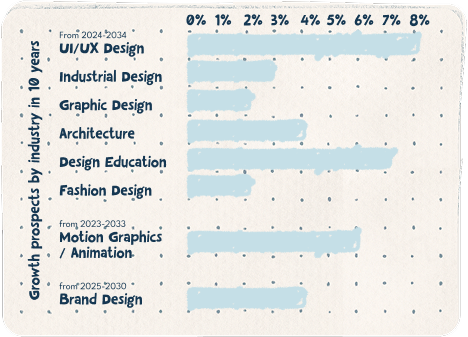
The design industry overall is growing and evolving, concentrating around strategy, digital, and human-centered roles, despite the growth of AI.
While there are some concerns as AI heavily integrates itself into more and more companies, research and industry analysis consistently shows that AI is more likely to augment than replace human designers for tasks like copywriting, social media, prompt engineering, and repetitive tasks. The humaneness in design can't be replaced.
Finding your fit
Designers work in all different kinds of environments and teams. These different career paths will affect how you work, who you work with, where you spend your time, and how much control you have over your projects.
Think of these categories as different "lifestyle packages." Many of these paths can overlap or change throughout your career. You might start in one area, work in another, or combine multiple.
Corporate
You work as part of a design team within a larger company that isn't primarily a design business—think tech companies, retail brands, banks, healthcare organizations, or entertainment companies. You're an employee focused on designing for that one company's products, services, and brand. You work closely with non-designers (marketing teams, product managers, engineers, executives) and translate their needs into visual solutions.

Typical work environment
Office-based (with remote flexibility)
Regular team collaboration + cross-sector partnerships
Structured hours (usually 9-5 or similar)
Focused on one brand/company
Lifestyle
Stable paycheck, benefits (health insurance, retirement plans), set hours (usually better work-life balance than agencies), predictable vacation time. You see the long-term impact of your work as the company evolves. However, you follow corporate processes, have less creative freedom due to brand guidelines, and experience slower pace/more meetings.


Structure
Flexibility
Structure vs. Flexibility
While you have expertise in your design role, you must adhere to established brand guidelines, navigate corporate approval processes, and align with business objectives set by others. Your creative decisions are constrained by company strategy, stakeholder opinions, and existing brand systems. The trade-off is stability and structure, but you sacrifice the freedom to explore wildly different styles or choose your projects.
What is a design career?
Filter by:
What is a designer?
A design career is about using creativity and critical thinking to solve problems and communicate ideas visually. Designers shape how people interact with products, spaces, images, and information—whether that's through apps, furniture, branding, illustrations, games, or experiences. Design blends art with strategy, requiring both imagination and practical skills. Designers must understand people's needs, work within constraints, and iterate on solutions that are functional, beautiful, and meaningful.

If you love...
creating things, thinking visually, and solving problems in innovative ways
It's perfect for those who want to make an impact—helping brands tell their stories, designing products that improve lives, or crafting experiences that delight users.
aesthetics, enjoy collaboration, and want to see their work in the world (on billboards, in stores, on screens, or in homes).
It's also ideal for students who want variety and flexibility, as designers can specialize or pivot between different fields throughout their careers.
The future of the industry...
The design industry overall is growing and evolving, concentrating around strategy, digital, and human-centered roles, despite the growth of AI.
While there are some concerns as AI heavily integrates itself into more and more companies, research and industry analysis consistently shows that AI is more likely to augment than replace human designers for tasks like copywriting, social media, prompt engineering, and repetitive tasks. The humaneness in design can't be replaced.
Finding your fit
Designers work in all different kinds of environments and teams. These different career paths will affect how you work, who you work with, where you spend your time, and how much control you have over your projects.
Think of these categories as different "lifestyle packages." Many of these paths can overlap or change throughout your career. You might start in one area, work in another, or combine multiple.
Filter by:
Corporate
You work as part of a design team within a larger company that isn't primarily a design business—think tech companies, retail brands, banks, healthcare organizations, or entertainment companies. You're an employee focused on designing for that one company's products, services, and brand. You work closely with non-designers (marketing teams, product managers, engineers, executives) and translate their needs into visual solutions.
Structure
Flexibility

Typical work environment
Office-based (with remote flexibility)
Regular team collaboration + cross-sector partnerships
Structured hours (usually 9-5 or similar)
Focused on one brand/company
Lifestyle
Stable paycheck, benefits (health insurance, retirement plans), set hours (usually better work-life balance than agencies), predictable vacation time. You see the long-term impact of your work as the company evolves. However, you follow corporate processes, have less creative freedom due to brand guidelines, and experience slower pace/more meetings.
Structure vs. Flexibility
While you have expertise in your design role, you must adhere to established brand guidelines, navigate corporate approval processes, and align with business objectives set by others. Your creative decisions are constrained by company strategy, stakeholder opinions, and existing brand systems. The trade-off is stability and structure, but you sacrifice the freedom to explore wildly different styles or choose your projects.